
If you have asked three agencies for a quote and received three completely different answers, you are not alone. One studio sends a one-page proposal for a logo. Another sends a 12-page document full of deliverables you have never heard of. So what is included in a brand identity package, and how do you know if the price you are being quoted is fair?
This guide breaks down every asset a professional brand identity package should contain, explains why each one matters, and gives you a printable-style checklist you can use to compare proposals side by side. By the end, you will be able to spot a package that is missing essential deliverables in about two minutes.
The Short Answer: What a Brand Identity Package Includes
A complete brand identity package is a set of visual and verbal assets that allow anyone, internally or externally, to represent your brand consistently. At a professional level it includes:
- A full logo suite (primary logo, secondary/horizontal lockup, submark, favicon, monochrome versions)
- All required file formats (vector and raster, print and digital, transparent backgrounds)
- A color palette with HEX, RGB, CMYK and Pantone values
- A typography system with hierarchy rules and font licensing information
- Supporting graphic elements (icons, patterns, textures, illustration or photography direction)
- Brand strategy and verbal identity (positioning, tone of voice, key messaging, tagline)
- Applied templates (business card, letterhead, email signature, social media kit, presentation deck)
- A written brand style guide that documents every rule
- Editable source files and a clear transfer of ownership
If a proposal is missing the last two items, it is not a brand identity package. It is a logo delivery.

Brand Identity Package vs Logo Design: The Difference That Costs People Money
A logo is a single asset. A brand identity is the system that tells you how that asset behaves in every situation: on a dark background, on a mobile app icon, next to a partner logo, printed on a vehicle, cropped into a social avatar.
| Logo Design Only | Brand Identity Package |
|---|---|
| One logo, sometimes one or two file formats | Logo suite with variations for every use case |
| Colors chosen inside the logo only | Full palette with primary, secondary and neutral tones |
| No usage rules | Documented clear space, minimum size, misuse examples |
| No templates | Ready-to-use stationery, social and presentation templates |
| Your next designer starts from zero | Any designer or agency can pick it up and stay on brand |
The hidden cost of buying a logo alone is everything you have to re-order later: the web designer invents colors, the print shop guesses the Pantone, the intern picks a font from a template. Within a year your brand looks like five different companies. Best Branding Package for Small Businesses is a useful companion to this.
Deliverable 1: The Logo Suite
A single logo file is never enough. A professional package delivers a family of related marks.
Primary Logo
The full, preferred version of your logo, usually combining a symbol and your company name. This is the one used whenever there is enough space and no constraint.
Secondary Logo (Alternative Lockup)
Same identity, different proportions. If your primary logo is stacked vertically, the secondary is typically horizontal, so it fits in a website header, an email banner or a sponsorship board without shrinking to an unreadable size.
Submark or Brand Mark
A condensed version, often just the icon, initials or a monogram. Used for social media profile pictures, stickers, packaging seals, watermarks and app icons.
Favicon and App Icon
A version optimized for 16×16 and 32×32 pixels, plus the square sizes required by iOS, Android and web manifests. Many packages forget this, and then someone crops the full logo into a blurry square.
Monochrome, Reversed and One-Color Versions
You need black, white and single-color variants for embroidery, engraving, stamps, invoices, faxed documents, dark mode interfaces and anywhere printing in full color is impossible or expensive. There is more on it in What’s Included in a Brand Identity Package.
File Formats You Should Receive
| Format | Type | Main Use |
|---|---|---|
| AI or EPS | Vector, editable | Master source file, printers, signage, future edits |
| SVG | Vector, web | Websites, retina screens, animation |
| Vector, universal | Sending to print partners and suppliers | |
| PNG | Raster, transparent | Slides, documents, social platforms |
| JPG | Raster, solid background | Directories, third-party platforms that reject PNG |
| WEBP | Raster, compressed | Fast-loading web pages |
Red flag: a quote that only mentions PNG and JPG. Without vector files you cannot scale your logo for a shopfront, a vehicle wrap or a trade show banner.
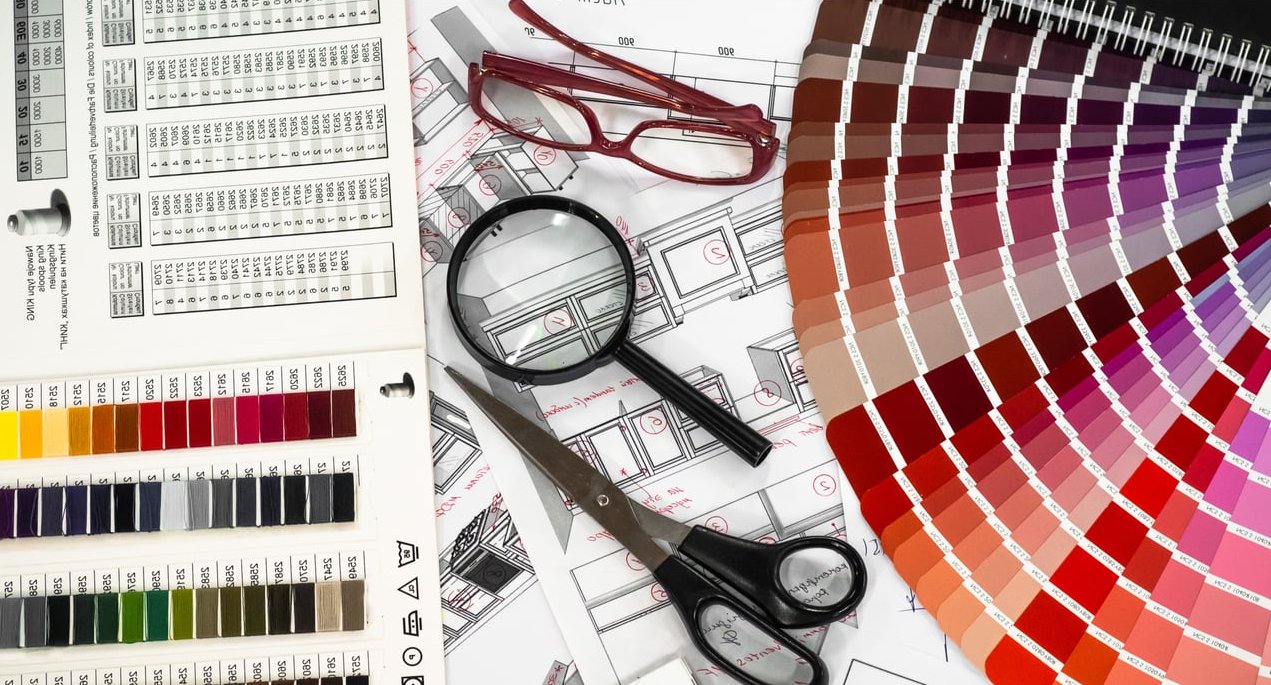
Deliverable 2: The Color Palette
A real palette is more than the two colors in your logo. Expect:
- Primary colors: one or two signature colors that carry brand recognition
- Secondary colors: supporting tones for accents, buttons, charts, categories
- Neutrals: backgrounds, body text, borders, dividers, dark and light surfaces
- Functional colors: success, warning and error states if you run a web app or e-commerce site
Each color must be documented in HEX (web), RGB (screens), CMYK (print) and ideally Pantone (spot color printing, textiles, packaging). A palette without CMYK and Pantone values will cost you money the first time you order printed materials.
A strong package also documents contrast and accessibility: which text color can sit on which background while meeting WCAG contrast ratios. This protects your website legally and practically.
Deliverable 3: The Typography System
Typography is what makes a brand recognisable even when the logo is not visible. Your package should define:
- Primary typeface: headlines and key statements
- Secondary typeface: body copy and long-form text
- Accent or UI typeface: optional, for buttons, captions, data, quotes
- System fallback fonts: what to use in Google Docs, Microsoft Office, email clients and CRM templates where custom fonts are not supported
- Hierarchy rules: sizes, weights, line height, letter spacing for H1 to H4, paragraph, caption
- Licensing: whether the fonts are open source (Google Fonts) or commercial, and who pays for the desktop, web and app licenses
Ask this question directly: “Are the fonts licensed for commercial use, and is the license in my company name?” Font licensing disputes are a genuine legal risk and most small business owners never think to ask.
Deliverable 4: Supporting Graphic Elements
This is where average packages and excellent packages separate. Supporting elements give you material to design with once the logo is placed:
- Icon set drawn in your brand style (services, features, process steps)
- Patterns and textures for backgrounds, packaging and social graphics
- Brand shapes or graphic devices such as frames, dividers, badges, arcs
- Illustration style or custom illustrations
- Photography direction: a mood board with rules on subject, lighting, composition, editing, plus examples of what to avoid
- Image treatment: duotone, overlays, crops, filters that instantly identify your visuals
Deliverable 5: Brand Strategy and Verbal Identity
Visual identity without strategy is decoration. Serious packages start with, or at minimum document, the thinking behind the design:
- Brand positioning: who you serve, what you promise, why you are different
- Audience profiles: the people the identity is designed to attract
- Brand personality and values: the traits that guide every design and copy decision
- Tone of voice: how you sound, with do and do-not examples
- Tagline and elevator pitch
- Key messaging pillars: the three to five points you repeat everywhere
- Naming or renaming where relevant
This section is often the deciding factor when you compare a low-cost freelancer quote to an agency quote. The price gap is usually strategy, not pixels.
Deliverable 6: Templates and Real-World Applications
Templates turn your identity from a PDF into daily practice. A typical professional package delivers:
Stationery and Business Essentials
- Business card, front and back, print ready
- Letterhead and Word or Google Docs version
- Email signature (HTML and plain)
- Invoice and quote template
- Envelope, folder, compliment slip where relevant
Digital and Social Media Templates
- Profile pictures and cover images sized for each platform you use
- Post templates for feed, carousel and story or reel formats
- Quote cards, announcement cards, testimonial layouts
- YouTube or podcast thumbnails and channel art
- Ad creative templates in the standard display sizes
Ask whether templates are delivered in Canva, Figma, Adobe or all three. If your team cannot open the file, the template does not exist.
Sales and Marketing Collateral
- Presentation deck (PowerPoint, Keynote or Google Slides) with master slides
- One-pager or service sheet
- Proposal or pitch document template
- Brochure or flyer layout
- Roll-up banner and event signage
Product, Web and Environment
- Packaging concepts, labels, stickers, tape
- Website style tile or UI kit (buttons, forms, cards, navigation)
- Vehicle livery, uniforms, storefront and interior signage
- Merchandise mockups
Deliverable 7: The Written Brand Style Guide
The style guide is the deliverable that protects the value of everything else. It is the document you hand to a new employee, a printer, a web developer or a media agency so the brand survives without you supervising every file.
A credible brand guidelines document contains:
- Brand story, positioning, values and personality
- Logo suite with the correct use for each variation
- Clear space and minimum size rules
- Logo misuse examples: do not stretch, do not recolor, do not add effects, do not place on busy backgrounds
- Color palette with all color codes and usage proportions
- Typography hierarchy with real examples
- Graphic elements, icons, patterns and how to combine them
- Photography and illustration direction
- Tone of voice with writing examples
- Applied examples showing the system in context
- Contact point for asset requests and approvals
Guides range from a tight 10 to 15 pages for a small business to 60 pages or more for a multi-market company. Length matters less than clarity, but a two-page “guide” that only shows colors and fonts is not a style guide.
Deliverable 8: Files, Ownership and Handover
The least glamorous section, and the one that causes the most disputes. Confirm in writing:
- Full copyright and ownership transfer to your company on final payment
- Delivery of editable source files, not just exports
- A clearly organized folder structure (logos, colors, fonts, templates, guidelines, mockups)
- Font files or purchase links with license documentation
- Trademark search status if you plan to register the mark
- How many revision rounds are included and what happens after
- Post-delivery support window and hourly rate for future requests
How Brand Identity Packages Are Usually Tiered
Studios package deliverables differently, but most offers fall into three levels. Use this table to work out which tier a quote actually belongs to, regardless of what the agency calls it. Background reading: https://whiskeyandred.com.
| Deliverable | Essential / Starter | Standard / Growth | Complete Identity System |
|---|---|---|---|
| Discovery and strategy | Brief questionnaire | Workshop, positioning, audience | Research, competitor audit, naming |
| Logo suite | Primary + submark | Primary, secondary, submark, favicon | Full responsive suite + animated logo |
| Color and type | Basic palette, 2 fonts | Extended palette, full hierarchy | Accessible system + custom or licensed type |
| Graphic elements | Not included | Patterns + basic icon set | Custom illustration and photo direction |
| Verbal identity | Not included | Tone of voice + tagline | Full messaging framework |
| Templates | Business card | Stationery + social kit + deck | Full collateral, packaging, web UI kit |
| Style guide | Mini logo usage sheet | Full brand guidelines PDF | Guidelines + online brand portal |
| Typical timeline | 1 to 2 weeks | 3 to 6 weeks | 8 to 16 weeks |
How to Compare Quotes Without Getting Fooled
Two proposals can differ by a factor of ten and both be honest. The difference is scope. Here is how to compare them properly.
Step 1: Build a Like-for-Like Checklist
List the deliverables from this article in a spreadsheet, then tick what each proposal explicitly includes. Anything not written down is not included.
Step 2: Count the Logo Variations
“Logo design” can mean one file or eight. Ask for the exact list of variations and formats.
Step 3: Check for the Style Guide
No guidelines document means no system. It also means you will pay again next year to rebuild consistency.
Step 4: Confirm Revisions and Concepts
How many initial concepts? How many revision rounds per stage? What is the cost of an extra round?
Step 5: Verify Ownership and Source Files
Some low-cost offers keep the vector files hostage or charge extra for “full rights”. Get it in the contract.
Step 6: Check Who Actually Does the Work
Marketplace gigs frequently resell stock logos or generic AI outputs. Ask to see full case studies, not just logo grids, and ask whether the mark has been checked for similarity with existing brands.
Warning Signs a Package Is Missing Essentials
- No vector files (AI, EPS, SVG) mentioned anywhere
- No brand guidelines or only a single-page “logo sheet”
- No CMYK or Pantone color values
- No mention of font licensing
- Unlimited concepts promised for a very low price (a sign of volume, not craft)
- Turnaround of 24 to 48 hours for a “complete brand”
- No discovery phase or strategy conversation before design starts
- Templates delivered as flat images rather than editable files
- Ownership not transferred in writing
Questions to Ask Before You Sign
- Can you send me the complete deliverable list with file formats?
- How many logo variations are included?
- Is a full brand guidelines document included, and how many pages typically?
- Which template files do I receive, and in which software?
- Who owns the copyright after final payment?
- Are fonts licensed commercially, and who pays?
- How many revision rounds are included per stage?
- What is your process and timeline, stage by stage?
- What happens if I need extra assets in six months?
- Do you also handle website, packaging or print production, or do I need another supplier?
A Realistic Rollout Plan After Delivery
Receiving the files is the start, not the finish. A practical sequence:
- Week 1: store all assets in a shared drive with a clear folder structure and share the guidelines with the whole team
- Week 2: update digital touchpoints first (website, social profiles, email signatures, invoices)
- Week 3 and 4: reorder print items as stock runs out to avoid waste
- Month 2: update signage, vehicles, uniforms and packaging
- Ongoing: run a quarterly brand audit to catch off-brand files before they spread
FAQ: What Is Included in a Brand Identity Package
What does a brand identity include?
A brand identity includes every visual and verbal element used to represent a business: logo suite, color palette, typography system, graphic elements, imagery style, tone of voice, messaging, applied templates and the guidelines that explain how to use them all consistently.
What are the 5 pillars of brand identity?
Most frameworks describe them as: purpose (why you exist), positioning (where you sit in the market), personality (how you behave and sound), perception (what customers actually think and feel), and consistency (delivering the same experience at every touchpoint). The visual assets sit on top of these five foundations.
What are the 8 visual elements of brand identity?
Typically: logo, color palette, typography, imagery and photography style, iconography, graphic shapes or patterns, layout and grid system, and motion or animation style.
How much does a brand identity package cost?
It depends entirely on scope and the experience of the team. As a rough guide in the current market, a starter package from a junior freelancer usually falls in the low hundreds to around 1,500 EUR or USD, an experienced freelancer or small studio delivering a full identity plus guidelines commonly ranges from roughly 2,500 to 10,000, and agency-level identity systems with strategy, naming, verbal identity and extensive applications start around 10,000 and go well beyond that for multi-market brands. Always compare the deliverable list, not just the number.
Is a brand style guide really necessary for a small business?
Yes. The smaller the team, the more people improvise. A short 10 to 15 page guide prevents inconsistent files, saves your suppliers time and keeps your brand recognisable as you grow.
How long does it take to create a brand identity package?
Between one and two weeks for a minimal package, three to six weeks for a standard identity with guidelines and templates, and two to four months for a complete identity system with strategy, naming and extensive applications.
Can I add deliverables later?
Yes, and this is often the smartest approach for a young business. Start with the core system (logo suite, colors, typography, guidelines, essential templates), then add packaging, motion, illustration or a web UI kit as budget allows. Just make sure the source files and ownership are yours from day one so any studio can build on the foundation.
What is the difference between a branding package and a brand identity package?
The terms are used interchangeably in most quotes. Strictly speaking, branding is the wider process including strategy, positioning and experience, while brand identity refers to the tangible assets produced. In practice, always read the deliverable list rather than the label on the offer.
Final Checklist Before You Approve a Quote
- Primary, secondary and submark logos, plus favicon and monochrome versions
- Vector and raster files in all standard formats
- Full color palette with HEX, RGB, CMYK and Pantone
- Typography system with hierarchy and licensing clarified
- Supporting graphic elements and imagery direction
- Tone of voice and core messaging
- Stationery, social media and presentation templates in editable files
- Written brand guidelines document
- Source files delivered and full ownership transferred in writing
If a proposal covers all nine lines, you are comparing a real brand identity package. If it covers three, you are comparing a logo with a marketing label on it.
Need help evaluating a proposal or building a complete identity system for your business? The team at Come2Net builds brand identity packages with every deliverable listed above, documented, editable and fully owned by you. Get in touch and we will send you a transparent, itemized scope so you know exactly what you are paying for.